Compare the best managed engineering services in 2026: CloudGeometry, Thoughtworks, Rackspace, Caylent and more, by layer, sign-off model and brownfield fit.
Key Takeaways (TL;DR)
- Best Overall for Existing Systems That Must Keep Changing: CloudGeometry runs managed engineering as an AI-managed software lifecycle, delivered as an integrated platform and managed service. Maintenance, modernization, feature work and the takeover of an existing system run through one governed sequence in your repositories and your cloud account, and a named CloudGeometry engineer signs off before anything ships. That answers the question behind most searches for this term: who will own the outcome for our software, not just supply hours against it?
- This List Is Not One Category: "managed engineering services" covers four different things. Application managed service providers run portfolios. Product engineering firms attach a managed model to delivery. Platform and SRE managed services keep cloud environments running. The AI-managed software lifecycle runs the change process itself. Decide which layer you are buying before you compare names.
- What "Managed" Changes About the Choice: the word moves accountability. In a capacity model you own the outcome and the vendor owns the hours. In a managed model the vendor commits to a result: an SLA, a sprint goal, an operated environment or a signed-off change. Read each company's own description of what it commits to, because the commitments differ more than the websites suggest.
- Price What You Can Compare: most firms here quote on request. Caylent publishes a starting monthly figure, Rackspace describes hours-based tiers, ClearScale describes one monthly fee, and CloudGeometry publishes its plans. Every figure carries its source and the date checked; nothing else is inferred.
- How to Choose: ask six questions. Which layer of the stack does the partner operate at; is execution supervised or autonomous; does it work on brownfield production systems; can you trace a deployed change back to its requirement; does system knowledge persist between people; and what unit are you buying, with what exit.
- Who This Page Is Not For: teams building a brand-new product with no production system, teams that only need a cloud bill managed, and teams that want a seat license for a coding assistant. Several companies below serve the first two groups well; AI-MSL is built for software that already runs.
Table of Contents
- Top Managed Engineering Services in 2026 at a Glance
- What Managed Engineering Buyers Are Choosing Between in 2026
- Best Managed Engineering Services: In-Depth Review and Comparison
- Why Does CloudGeometry Work Across Managed Engineering Use Cases?
- When Does It Make Sense to Change Your Delivery Model?
- What Makes a Good Managed Engineering Partner?
- How to Choose the Right Managed Engineering Service for Your Needs
- Everything You Need to Know About Managed Engineering Services
- Already Have a Managed Service Provider? Add the Layer It Cannot Reach
- FAQs About Managed Engineering Services
Top Managed Engineering Services in 2026 at a Glance
The nine companies below all use the word "managed", and they mean different things by it. The table sorts them by the layer they operate at, because a cloud operations program and an application portfolio contract are not substitutes. "Who signs off" records how each company describes its own accountability for what reaches production. How each company positions itself toward systems that already run is covered in its entry below.
Every third-party fact on this page comes from the company's own public website, checked on 5 November 2026. Where a company does not state something, the table says "on request" or leaves it out.
What Managed Engineering Buyers Are Choosing Between in 2026
"Managed engineering services" is not a category anyone defined on purpose. It is the phrase buyers reach for when they are tired of buying hours and want someone to own a result. Four kinds of company answer that search, and they are not interchangeable.
Application Managed Service Providers
These firms run application portfolios under long contracts: incidents, maintenance, enhancements and, increasingly, modernization in the same agreement. Hexaware and DXC Technology describe themselves this way. The commitment is usually service levels across a portfolio, delivered by people plus the provider's own automation platforms, and the unit is the portfolio.
Product Engineering Firms With a Managed Delivery Model
Firms that mostly build things have added a managed model for the systems they or others built. Thoughtworks describes application, infrastructure and data managed services framed as continuous modernization. Simform describes SLA-driven application support with named ownership and a modernization path. The commitment sits closer to the application than a portfolio contract, and the people on it also build, which matters when the work is change rather than upkeep.
Platform and SRE Managed Services
This layer keeps cloud environments running: monitoring, incident response, patching, security, cost control and the engineering that improves the platform under an application. Rackspace Technology, Mission Cloud, Caylent and ClearScale each describe a version of it, from a dedicated pod working in sprints to packaged operations programs with stated response commitments. The commitment is to the environment; whether the application code keeps changing in a controlled way is generally outside the scope.
The AI-Managed Software Lifecycle
CloudGeometry's AI-MSL takes a different approach. It does not supply a team, a portfolio contract or an operated environment. It runs the change process for an existing system: a change is specified from business intent, its impact is analyzed against a continuously maintained model of the system, it is implemented and tested by AI, and a CloudGeometry engineer approves each gate before it moves on. Maintenance, modernization and new features go through the same sequence and produce the same record. The commitment is to each change, and the unit is the change, not the person or the environment.
Different approaches optimize for different outcomes. Portfolio contracts suit scale across many applications. Product engineering firms with a managed model suit buyers who want builders on the support rotation. Platform and SRE services suit the case where the environment is the risk. A managed lifecycle suits the case where the hard part is keeping one system changing without losing control of what changed and who approved it.
Best Managed Engineering Services: In-Depth Review and Comparison
1. CloudGeometry
Overview
CloudGeometry is a Sunnyvale, California engineering company that runs AI-MSL, an AI-managed software lifecycle, delivered as an integrated platform and managed service. The platform keeps a continuously maintained model of your system, called AppGraph, covering the code, dependencies, workflows and history a change touches. The managed service puts an AI Lifecycle Manager on the engagement as your counterpart and AI-MSL Engineers on the approval gates.
What makes it a managed engineering service rather than a tool is the scope it takes on. Ongoing maintenance: patches, defects, dependency updates, security fixes and documentation kept in step with the code. Modernization: incremental and embedded in ongoing work rather than run as a rewrite. Feature development on the existing system, from business intent through requirements, specifications, implementation, test and release as one governed sequence. And the takeover of a system from a departing team, vendor or acquisition, with its knowledge captured into AppGraph. Release management and production operations can be added where wanted. All of it runs in your repositories and your cloud account, and every AI action is logged with timestamp, actor and reasoning.
CloudGeometry is an Anthropic partner for Claude Code and an AWS consulting partner. The models and tools run inside the lifecycle; what is bought is the governed sequence and the named sign-off.
Ideal For
- Companies with production software two or more years old and a backlog that outgrows the team
- Owners and business managers whose engineering runs through an outside vendor or remote team and who want one accountable party per change
- CTOs taking over a system from a departing team or acquired company, where the knowledge has to be captured before the people leave
- Teams that want to try the model on one real backlog item before committing further
Top Features
- One Governed Sequence for All Work: maintenance, modernization, features and takeover run through the same requirements-to-release lifecycle, so the record has the same shape whatever the change was.
- AppGraph System Knowledge: a maintained model of your code, dependencies, workflows and history, so impact is analyzed before a change is built and knowledge stays in the system when people move on.
- Named Sign-Off at Every Gate: a CloudGeometry engineer approves before a change ships, and every action behind it is logged with timestamp, actor and reasoning.
- Your Repositories, Your Cloud Account: work happens in your Git repositories and your cloud account through your existing CI/CD, with no runtime of ours to migrate onto.
- Takeover With Knowledge Capture: an existing system can be taken over from a departing team or vendor, with its structure and history captured into AppGraph during onboarding.
Why We Are the Right Fit for Managed Engineering
We say "fit" rather than "best" on purpose. Most managed engineering contracts commit to an environment or to service levels across a portfolio. AI-MSL commits to each change: specified, approved, built, tested and signed off by name, with the record produced as part of the work. If your situation is a single system under change pressure, that is the commitment that matters. If your situation is a hundred applications to keep running, or a cloud estate to operate, several companies below are a better match and we say so in their entries.
Pros
- One accountable party for each change from intent to release
- Maintenance, modernization, features and takeover under one model and one record
- System knowledge persists in AppGraph between changes and between people
- Low-commitment entry: the pilot runs one real backlog item in about a week
Cons
- Not offered for greenfield products with no existing system
- Not a portfolio contract; organizations that need hundreds of applications operated under one agreement should look at the application managed service providers below
- Not a seat license and not self-serve: engagements are scoped with a CloudGeometry engineer, and the onboarding assessment comes first
- A smaller company than the listed firms on this page, which matters to buyers who need a long procurement history
Pricing
Plans are published on the AI-MSL plans page. Each change is specified, impact-analyzed and approved before it is built. The pilot includes $2,000 in Dev credits for the first backlog item.
Final Verdict
The strongest option on this list for a company whose problem is one production system that must keep changing under a named sign-off. Not the option for operating a large portfolio or a cloud estate on its own.
2. Thoughtworks
Overview
Thoughtworks is a global technology consultancy founded in Chicago in 1993, with more than 10,000 people and 47 offices in 18 countries, per its own site. Its managed services page describes application managed services that "go beyond basic maintenance", infrastructure managed services run with site reliability engineering, and data managed services using DataOps and FinOps, with the stated aim of moving IT "beyond reactive maintenance and into continuous modernization". Its AI/works agentic development platform is named as part of delivery, and client stories on the page include Sportradar and WorkflowMAX. Source: thoughtworks.com, checked 5 November 2026.
Ideal For
- Enterprises that want the firm that builds their systems to also run them
- Organizations that want application, infrastructure and data run as one managed arrangement
- Buyers who value a consultancy's modernization practice over a pure operations shop
Top Features
- Three Managed Lines: application, infrastructure and data managed services, described together.
- Modernization Framing: managed services positioned as continuous modernization rather than upkeep.
- SRE in Infrastructure Services: site reliability engineering named as the operating approach.
- Agentic Development Platform: AI/works named as part of how the managed work is delivered.
Why It Is a Strong Alternative
Thoughtworks is the closest match on this page for a company that wants builders rather than operators on its managed arrangement. CloudGeometry takes a different approach: instead of a consultancy team inside your governance, AI-MSL runs the lifecycle as a service with its own engineers on the gates, for the mid-market company that would rather not run that governance itself.
Pros
- Deep engineering bench with a long modernization record
- Managed services described as evolution of the estate, not only maintenance
- Global presence for multi-region organizations
Cons
- Pricing and engagement terms are not published
- Team-based delivery; the change record and release control sit inside your process
- Productivity and savings figures on its site are self-reported and best validated in reference calls
Pricing
On request.
Final Verdict
A strong choice for an enterprise that wants its managed services run by a modernization-minded consultancy.
3. Simform
Overview
Simform is a product engineering company founded in 2010 with more than 1,200 engineers across product engineering, cloud, DevOps, platform engineering, data, AI and managed services. Its application managed services page describes "24×7 SLA-driven application support" through its SimDesk tooling, with incidents routed to L2 and L3 engineers who own the application, SRE-aligned reliability practices, AIOps monitoring, continuous modernization and release engineering through a co-engineering model, and governance covering audit trails, policy controls and patch workflows. Each engagement is described as including "named ownership, SLA discipline, structured reporting, and executive governance", with transition through knowledge transfer, documented runbooks, parallel-run periods and phased onboarding.
The company lists an Azure Expert MSP designation, Microsoft Solutions Partner designations and a Services Partner designation with Anthropic, alongside AWS, Google Cloud, Databricks and Snowflake partnerships. Logos on its site include Cisco, Twilio, VMware, Bank of America and Red Bull, without stating which use its managed services. Source: simform.com, checked 5 November 2026.
Ideal For
- Mid-market companies that want SLA-driven support and a modernization path from one partner
- Teams taking an application over from an outgoing provider and wanting a documented transition
- Microsoft-centered estates that want an Azure Expert MSP on the support rotation
Top Features
- SLA-Driven Support: round-the-clock application support with incidents owned by L2 and L3 engineers.
- Named Ownership and Governance: each engagement described with named ownership, structured reporting and executive governance.
- Modernization and Release Engineering: CI/CD, DevOps automation and replatforming inside the managed arrangement.
- Documented Transition: knowledge transfer, runbooks and parallel-run periods described as part of onboarding.
Why It Is a Strong Alternative
Simform's model is the nearest on this page to a mid-market managed engineering retainer with named people on it. The difference from AI-MSL is where the change record lives. Simform's support and release engineering run inside your delivery process; AI-MSL produces the requirement-to-release record for each change as part of the service, with a CloudGeometry engineer accountable at each gate.
Pros
- Clear description of what the managed engagement includes
- Builders and operators from the same company
- Broad partner designations across the major clouds and model providers
Cons
- Pricing and SLA terms are not published
- Headquarters is not stated on its site
- Which named clients use the managed service is not stated
Pricing
On request.
Final Verdict
A well-described mid-market option for SLA-driven support with a modernization path attached.
4. Hexaware
Overview
Hexaware is an IT services provider with more than 33,000 employees across 68 offices and 33 years in the business, per its own site, with stated annual revenue above $1.5 billion. Its application services page describes the company as operating enterprise application portfolios using its own platforms and AI-enhanced engineering teams, with delivery spanning planning, development, modernization and management to "build, run, and transform your applications". Three named platforms support it: RapidX for AI agents across the development lifecycle, Amaze for cloud migration automation and Tensai for AIOps.
Case studies are mostly anonymized; the European Bank for Reconstruction and Development is named as a strategic technology partner, and the company cites Gartner and ISG analyst positions. Source: hexaware.com, checked 5 November 2026.
Ideal For
- Enterprises with large portfolios that want build, run and transform under one provider
- Organizations with mainframe or packaged estates on a modernization path
- Buyers who want a provider's own automation platforms applied across the portfolio
Top Features
- Portfolio-Scale Operation: application management positioned as operating whole portfolios.
- Named Platforms: RapidX, Amaze and Tensai for development, migration and operations.
- Build, Run and Transform: development, management and modernization under one service line.
- Analyst Recognition: Gartner and ISG positions cited on its site.
Why It Is a Strong Alternative
For a portfolio of dozens or hundreds of applications, Hexaware's scale and tooling are the right shape and AI-MSL is not. CloudGeometry's model differs in granularity: the commitment is to each change on one system, with a named sign-off, rather than to service levels across an estate.
Pros
- Scale and global office footprint
- Platforms for development, migration and operations in one provider
- Modernization and management in the same contract
Cons
- Headquarters, SLA terms and pricing are not stated on its site
- Most case studies do not name the client
- Contract scale suits large estates better than one mid-market system
Pricing
On request.
Final Verdict
A credible portfolio-scale provider for enterprises that want management and modernization from one firm.
5. DXC Technology

Overview
DXC Technology is a publicly listed IT services company serving clients across more than 70 countries, with more than 60 years of history per its own site. Its managed applications page describes the company as a leader in managed applications with an "ROI-focused applications transformation and management delivery model", covering portfolios of custom and packaged applications in hybrid environments, with real-time monitoring, automated resolution, intelligent automation and RPA. The page states that "flexible consumption-based pricing models allow customers to dial up and down services". Named client stories include TotalEnergies Marketing and Services, JM Family and Novelis, with United Airlines, Bayernwerk and Ferrari appearing elsewhere on its site. Source: dxc.com, checked 5 November 2026.
Ideal For
- Large organizations with mixed custom and packaged portfolios that need one management contract
- Buyers that want consumption-style flexibility on a long-running agreement
- Procurement teams that need a listed vendor with a global footprint
Top Features
- Portfolio Management at Scale: custom and packaged applications across hybrid environments.
- Automation Inside the Contract: monitoring, automated resolution and RPA described as part of delivery.
- Consumption-Based Models: services that can be dialed up and down, per the company.
- Global Footprint: clients served across more than 70 countries, per its site.
Why It Is a Strong Alternative
DXC is a safe choice when the program is large, long and procurement-led. CloudGeometry is built for a different buyer: the mid-market company with one system under steady change, where the deciding question is whether each change traces back to its requirement and who signed it off.
Pros
- Global scale and a listed-company procurement profile
- Flexible consumption framing stated on its own site
- Named references across industries
Cons
- Headquarters and headcount are not stated on the pages checked
- Performance figures on its site are self-reported
- Scale suits large estates rather than a single mid-market backlog
Pricing
Consumption-based models described on its site; figures on request.
Final Verdict
The large-portfolio choice for organizations that want management and automation under one listed provider.
6. Rackspace Technology
Overview
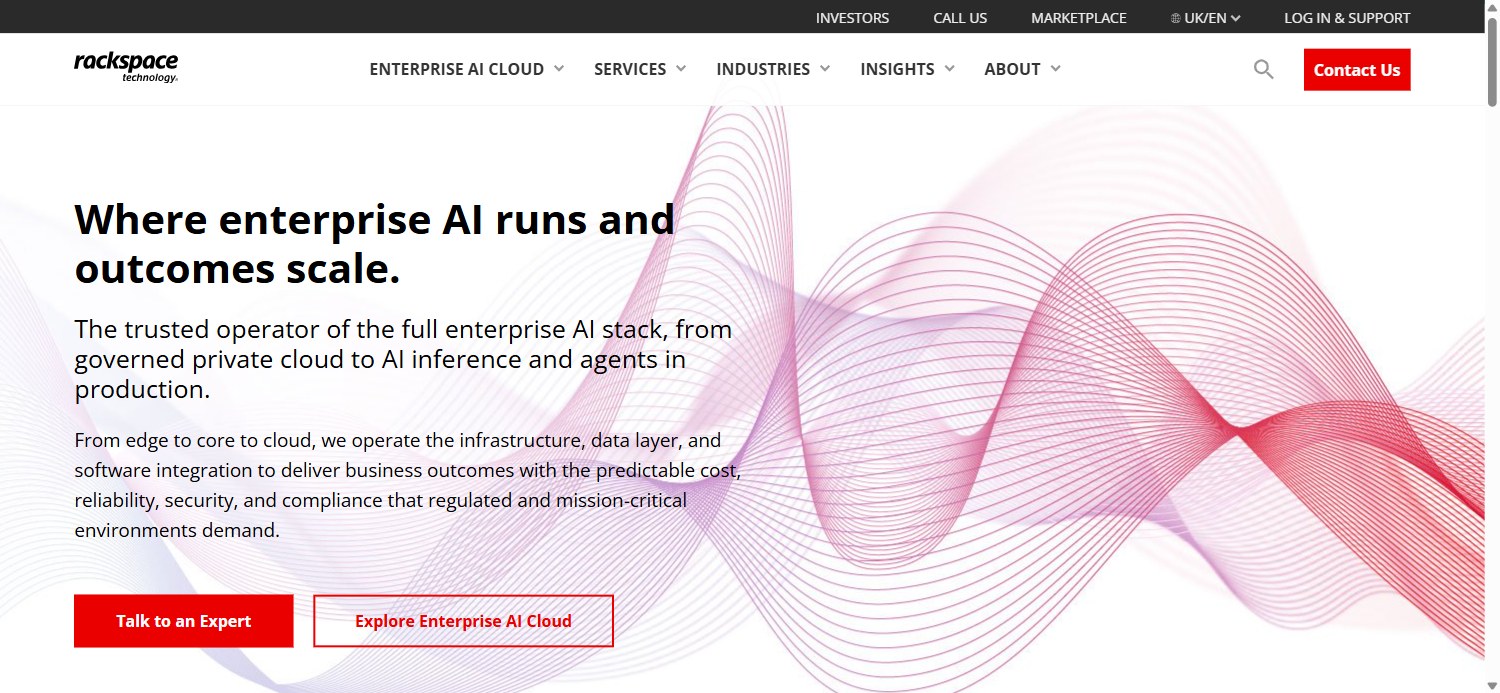
Rackspace Technology offers professional and managed services for modernization, optimization and ongoing operations, and says it will "remain accountable for outcomes long after deployment is complete". It states more than 5,800 employees, customers in more than 120 countries, 39 data centers and a role in creating the managed hosting industry in 1998. Its Elastic Engineering service is "on-demand access to a dedicated pod of cloud engineers" working "do-with" alongside the client's team in an agile, sprint-based model, delivering "against your initiatives, not our SLAs" and "without the constraints of a fixed scope of management". A pod is nine people with a stated composition, from an engagement manager and lead cloud architect to cloud engineers.
Covered work includes migrations, architecture, CI/CD pipelines, security and reliability improvements and management of environments across AWS, GCP and Azure. Pricing is described as flexible, tiered and hours-based, scaling monthly, and a separate Modern Operations service adds round-the-clock managed cloud operations. Buyatab is the named case study. Source: rackspace.com, checked 5 November 2026.
Ideal For
- Teams that want a persistent pod of cloud engineers rather than a project or a ticket queue
- Multi-cloud estates that need migration, architecture and pipeline work done in sprints
- Organizations that want engineering and managed operations from one provider
Top Features
- Dedicated Pod: the same nine-person team over time, with a stated composition.
- Sprint-Based Delivery: goals broken into weekly sprints against the client's initiatives.
- Hours-Based Tiers: fractional access to the pod that scales monthly.
- Managed Operations Alongside: Modern Operations for continuous operations when wanted.
Why It Is a Strong Alternative
Rackspace's pod is the most clearly described managed engineering unit on this page for platform work: a capacity model with continuity, where the client owns the backlog. AI-MSL is organized around the application change rather than the platform, and a sign-off per change rather than hours per month. A company could use both.
Pros
- Pod composition and working model stated plainly
- Multi-cloud coverage and a large operations footprint
- Engineering and managed operations available together
Cons
- Tier hours and prices are not published
- The unit is engineer hours; the client still owns what the hours are spent on
- Application-level change governance is outside the stated scope
Pricing
Flexible, tiered, hours-based pricing described on its site; figures on request.
Final Verdict
The pod model to pick when the platform, not the application, is the work.
7. Mission Cloud
Overview
Mission Cloud is an AWS-only services company founded in 2017 and acquired by CDW in 2024, with a stated team of more than 300 professionals and more than 500 customers. It describes itself as "one AWS partner for AI solutions, migrations, and operations" and is an AWS Premier Tier Partner with 18 AWS competencies and more than 350 AWS certifications. Its managed services are sold as four packages, Cloud Gateway, Cloud Foundation, Cloud Operate and Cloud Secure, running from guidance and foundational practices through fully managed monitoring, round-the-clock alert response and fully managed security, detection and response. Named case studies include the Boston Celtics, MagellanTV and COMPLY. Source: missioncloud.com, checked 5 November 2026.
Ideal For
- AWS-only organizations that want to pick an operations package rather than scope a bespoke contract
- Companies that want cost management, operations and security from one AWS partner
- Buyers who value a large parent behind a specialist team
Top Features
- Four Packaged Tiers: from guidance through fully managed operations and security.
- AWS-Only Focus: competencies and certifications concentrated on one cloud.
- Operations and Security Together: monitoring, alert response, detection and response in the upper packages.
- CDW Backing: part of a large technology provider since 2024.
Why It Is a Strong Alternative
Mission Cloud is the clearest packaged choice on this page for keeping an AWS estate operated and secured. It commits to the environment. CloudGeometry commits to the changes made to the software running in that environment, a different layer; for most AWS-based companies the two are complementary rather than competing.
Pros
- Packages make the scope easy to compare
- Deep AWS specialization with stated competencies
- Recognizable named customers
Cons
- AWS only; multi-cloud estates need another provider
- Package prices are not published
- Application change and release governance are outside the packages' stated scope
Pricing
Four packages described on its site; figures on request.
Final Verdict
The packaged operations choice for AWS-only estates.
8. Caylent
Overview
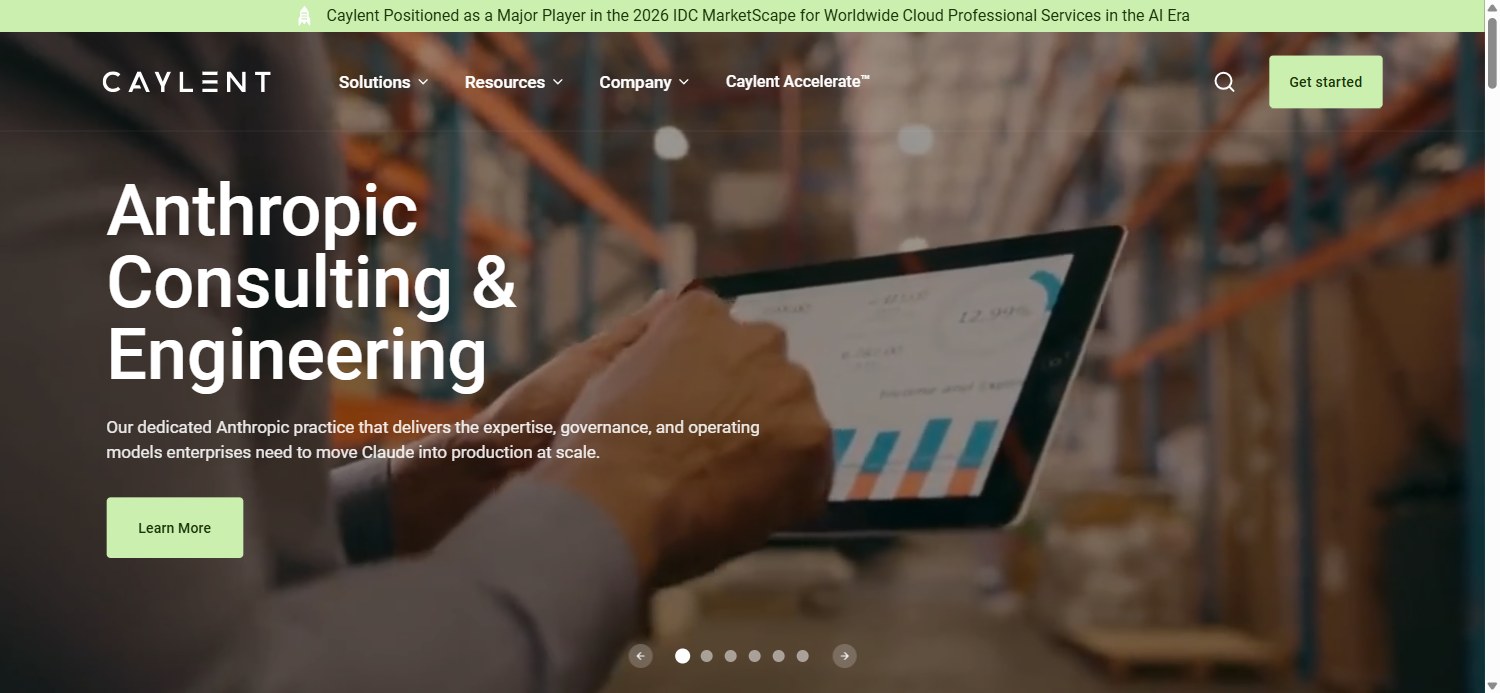
Caylent is an AWS Premier Tier Services Partner that also lists a dedicated Anthropic practice and Anthropic Preferred Services Partner status, with more than 850 AWS certifications and several AWS Partner of the Year awards cited on its site. Its Cloud Operations and Managed Services page describes agents and experts that "continuously operate, optimize, and evolve your AWS environment", with "SLO-driven accountability for outcomes". A ticket analysis agent triages incidents, guardrailed agents handle remediation while "AWS architects and engineers approve and audit the work", and further agents surface cost savings and order the operations backlog. Each engagement includes a dedicated lead architect, a senior AWS engineering bench and a customer success manager.
Caylent publishes a starting price: CloudOps Core from $7,500 per month, scaling with the environment, and an AIOps Blueprint as a fixed fee from $125,000, with a 30-day trial of CloudOps Core for qualified migration customers. Named clients include Indeed, Taco Bell, BrainBox AI, Smarsh and boberdoo. Source: caylent.com, checked 5 November 2026.
Ideal For
- AWS teams that want operations run against service level objectives with agent-assisted triage
- Companies migrating to AWS that want operations to start on day one
- Buyers who want a published starting price before the first call
Top Features
- SLO-Driven Operations: accountability framed around service level objectives.
- Agents With Human Approval: remediation by guardrailed agents, approved and audited by AWS engineers.
- Named Engagement Roles: lead architect, engineering bench and customer success manager on each account.
- Published Starting Price: rare on this page, and useful for budgeting.
Why It Is a Strong Alternative
Caylent's operations model is the closest on this page to AI-MSL in mechanism: agents do the high-volume work and named engineers approve it. The difference is the object. Caylent applies that model to the AWS environment; AI-MSL applies it to the application change itself, from requirement to release, with the record attached. A company on AWS with a system under change could reasonably run both.
Pros
- Transparent starting price and engagement roles
- Human approval of agent remediation stated plainly
- Anthropic and AWS partner standing
Cons
- AWS only
- Headquarters, founding year and headcount are not stated on its site
- Application change governance is outside the stated operations scope
Pricing
The company states that CloudOps Core starts at $7,500 per month, scaling with the environment, and that its AIOps Blueprint starts at $125,000 as a fixed fee. Source: caylent.com, checked 5 November 2026.
Final Verdict
The AWS operations choice for teams that want agent-assisted operations with named engineers approving the work.
9. ClearScale
Overview
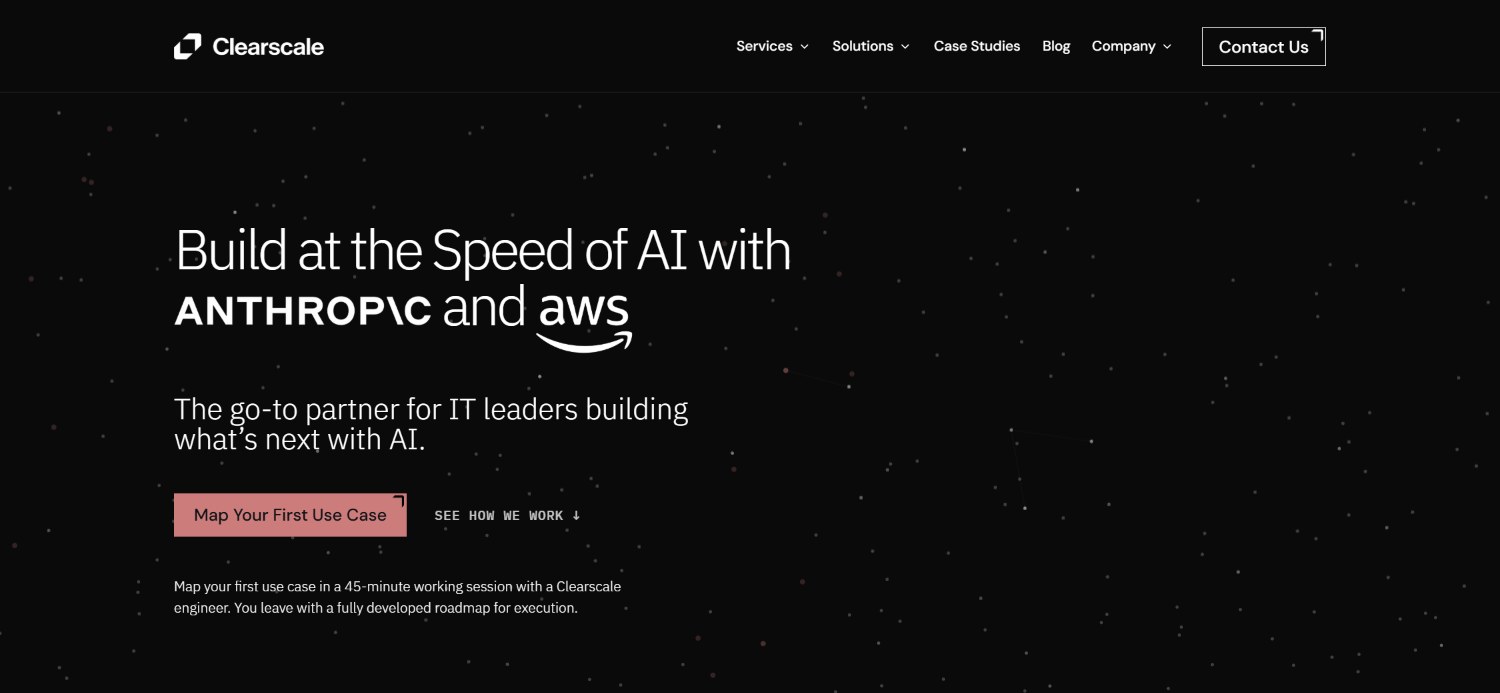
ClearScale describes itself as a partner for building, modernizing and operating on AWS and for bringing Anthropic's Claude into production, and lists a Claude Select Services Partner designation. Its managed services are "a monthly managed services program that brings together cloud operations, technology strategy, and expert engineering": monitoring, patching, backup and recovery, security, architecture and cost reviews, round-the-clock monitoring with a stated fifteen-minute production response SLA, forward deployed engineers, production readiness work and AI security, governance and cost control. The commercial framing is "one team, one monthly fee, flexible support". Named clients include PBS, The Salvation Army, SmugMug, CMA CGM and J. J. Keller & Associates. Headquarters, founding year and headcount are not stated. Source: clearscale.com, checked 5 November 2026.
Ideal For
- Companies that want operations, strategy and engineering under one predictable monthly arrangement
- AWS workloads that need a stated production response commitment
- Teams putting AI features into production that want the operations partner to cover them
Top Features
- One Monthly Program: operations, strategy and engineering described as one arrangement.
- Stated Response SLA: a fifteen-minute production response commitment on its site.
- Forward Deployed Engineers: engineering embedded in the program rather than sold separately.
- AI Production Coverage: security, governance and cost control for AI workloads named in scope.
Why It Is a Strong Alternative
ClearScale's program is the simplest retainer shape on this page: one fee, one team, the environment kept running and improved. CloudGeometry works on the layer above, where the question is not whether the environment is healthy but whether each change to the software was specified, approved and signed off by name. They answer different questions, and a company can need both answers.
Pros
- Response commitment stated on its own site
- Engineering included in the monthly program
- Recognizable named customers
Cons
- The monthly fee is not published
- AWS only
- Company facts such as headquarters and headcount are not stated
Pricing
One monthly fee, per its site; figures on request.
Final Verdict
A straightforward monthly operations program for AWS workloads with engineering included.
Why Does CloudGeometry Work Across Managed Engineering Use Cases?
1. CloudGeometry When You Have a Managed Service Provider and the Backlog Still Does Not Move
Operations providers keep the environment healthy, and that is their job. The backlog of application changes is usually outside their scope. AI-MSL takes the change work itself: each item is specified, impact-analyzed, built, tested and signed off, so the environment partner and the lifecycle partner cover different layers of the same system.
2. CloudGeometry When a Team or Vendor Is Leaving and the System Is Staying
A departing team, an ending vendor contract or an acquisition leaves a system that still has to change. Taking it over is part of what AI-MSL is for: the system's structure, dependencies and history are captured into AppGraph during onboarding, and from then on changes run through the governed sequence with a named sign-off, so continuity stops depending on who remembers what.
3. CloudGeometry for Maintenance That Keeps the System Current Between Features
Patches, defects, dependency updates, security fixes and documentation that drifts from the code are the work that gets deferred when a team is stretched. Under AI-MSL that work runs through the same lifecycle as feature work, with the same record. The system stays understood, patched and current between feature work.
4. CloudGeometry for Modernization Without a Rewrite
Modernization through AI-MSL is incremental and embedded in ongoing work: one specified change at a time, each approved and recorded, rather than a parallel rewrite program. The application modernization page describes the approach for systems that cannot stop for a replacement.
5. CloudGeometry for Knowledge Retention Through Attrition
In a managed contract built on people, system knowledge lives in the people and leaves with them at the end of the contract or the engineer's tenure. AppGraph keeps the structure, dependencies and history in the system, so the next change starts from the current state rather than from a fresh discovery exercise.
6. CloudGeometry for Adding AI Capability to an Existing Product
Assistants, document processing and decision support are being added to products that already run and already carry years of logic. Through AI-MSL those features arrive as governed changes with the same impact analysis, sign-off and record as any other change, rather than as a side project with its own rules.
When Does It Make Sense to Change Your Delivery Model?
Three signals tend to appear together. The backlog grows while the team stays flat. A growing share of senior time goes to explaining what changed rather than changing it. And system knowledge sits with a few people whose departure would be a risk event. Any one of these can be absorbed by a capacity contract or an operations provider. All three together usually mean the model, not the people, is the constraint.
The opposite signals matter too. If you are building a new product, if your team has spare review capacity, if the real problem is the environment, or if you have hundreds of applications to operate, a platform provider or a portfolio contract is the better fit, and several are on this list.
What Makes a Good Managed Engineering Partner?
Which Layer of the Stack It Operates At
Portfolio, application, platform or lifecycle. Each is legitimate; comparing across them produces false conclusions about what "managed" covers.
Supervised or Autonomous
Ask who approves before a change reaches production and whether that person is named. Several companies here describe agents doing operations work; the ones worth shortlisting also say who approves it. AI-MSL runs AI execution under expert supervision, with a CloudGeometry engineer approving every gate.
Works on Brownfield Production Systems
Ask for an example of the partner changing a system it did not build. Migration references do not predict how a partner handles years of accumulated logic.
Can You Trace a Deployed Change to a Requirement
Ask to see one real change record. If it has to be assembled from tickets, commits and chat messages, it will not survive the first serious question.
Does System Knowledge Persist Between Sessions and People
Ask what the partner keeps about your system between engagements, where it is kept, and whether you keep it when the contract ends.
What Unit Are You Buying, and What Does Exit Look Like
Engineer hours, a package tier, service levels across a portfolio, or a change. Ask what you own and what remains when the engagement ends. With AI-MSL the code stays in your repositories and there is no runtime of ours to leave behind.
How to Choose the Right Managed Engineering Service for Your Needs
1. Write Down What You Want Managed
One sentence: the environment, the portfolio, the support rotation, or the changes to one system. Most bad shortlists come from comparing a cloud operations package to a lifecycle service on price.
2. Separate Keeping It Running From Keeping It Changing
Operations partners and change partners are rarely the same company. Decide which problem is costing you more and shortlist for that one first.
3. Ask for the Commitment in the Partner's Own Words
Every company on this page describes what it commits to: an SLA, an SLO, a sprint, a package, a change. Read that description before the sales call and ask the partner to confirm it in writing.
4. Check the Commercial Unit Against Your Constraint
If your constraint is review capacity, an hours model adds to it. If it is predictability, ask how the unit is estimated and approved before work starts. If it is continuity, ask what happens to system knowledge when the contract ends.
5. Evaluate Against a Real System
Give the shortlist one real backlog item on your real codebase, with your real reviewers, and look at what comes back. The pilot is how CloudGeometry runs this test; most companies on this list will agree to an equivalent.
Everything You Need to Know About Managed Engineering Services
Managed engineering services are arrangements in which a provider commits to an engineering outcome rather than to a number of people: a portfolio kept running under service levels, an application supported and modernized under named ownership, a cloud environment operated against objectives, or a software change taken from requirement to release under a named sign-off. The market in 2026 includes global application managed service providers, product engineering firms with a managed model, AWS and multi-cloud operations specialists and the AI-managed software lifecycle, and the right choice depends on which layer of your system is the one costing you control.
For an existing system, the deciding factors are who signs off on each change, whether a deployed change traces back to its requirement, and where system knowledge lives when people and contracts move on. CloudGeometry's AI-MSL is built around those three questions; the other companies on this page answer them in different ways, each suited to a different layer of the problem.
Already Have a Managed Service Provider? Add the Layer It Cannot Reach
Most companies reading this already have an operations partner, a portfolio contract or a support retainer, and that relationship usually continues. What AI-MSL adds is the lifecycle layer for the system that needs it most: one real backlog item from your queue, specified, built, tested and recorded, with our engineers signing off every change, in about a week. The pilot includes $2,000 in Dev credits on us.
Start a pilot on one backlog item or compare the AI-MSL plans.
FAQs About Managed Engineering Services
What are managed engineering services?
Arrangements in which a provider commits to an engineering outcome rather than to supplying people: a portfolio kept running under service levels, an application supported under named ownership, a cloud environment operated against objectives, or a change taken from requirement to release under a named sign-off. The first job is to decide which of those you are buying.
How are managed engineering services different from outsourcing or staff augmentation?
The unit and the accountability. Outsourced and augmented teams are capacity: you own the outcome and govern the work. A managed arrangement commits the provider to a result, and the provider's own description tells you what that result is. Several companies on this page offer both, described as separate services.
How much do managed engineering services cost?
Most providers quote on request. Caylent publishes a starting monthly figure, Rackspace and ClearScale describe their pricing shapes without figures, and CloudGeometry publishes its plans. Treat any number on a comparison site as unverified until you see it on the provider's own page.
What is AI-MSL?
AI-MSL is CloudGeometry's AI-managed software lifecycle, delivered as an integrated platform and managed service. AI executes the lifecycle stages from requirements to release, grounded in a maintained model of your system, and CloudGeometry engineers approve each gate before a change ships. Maintenance, modernization, feature work and the takeover of an existing system all run through it.
Does AI-MSL run without human involvement?
No. AI performs the high-volume lifecycle work and CloudGeometry engineers approve every gate before a change ships. Production signals feed back into the lifecycle as candidate improvements, and a person decides which of those proceed.
Can CloudGeometry take over a system from an outgoing vendor or team?
Yes. Taking over an existing system is one of the situations AI-MSL is built for. Its structure, dependencies and history are captured into AppGraph during onboarding, and changes then run through the governed sequence with a named sign-off, so continuity does not depend on the people who are leaving.
Which companies on this list are best for operating a cloud environment?
Rackspace Technology, Mission Cloud, Caylent and ClearScale all describe operations services for cloud environments, three of them AWS-only. CloudGeometry does not operate your environment as its primary service; it runs the changes to the software inside it.
Which companies are best for a large application portfolio?
Hexaware and DXC Technology describe portfolio-scale application management. Thoughtworks describes managed services across application, infrastructure and data. CloudGeometry is built for one system under change rather than a portfolio.
How is a managed software lifecycle different from a managed service provider?
A managed service provider commits to the environment or the portfolio: it stays up, stays patched, meets its service levels. A managed software lifecycle commits to each change to the software: specified, approved, built, tested and recorded by the service, with its own engineers accountable at each gate. They sit at different layers and are often used together.
How do I evaluate a managed engineering partner before committing?
Read the commitment in the partner's own words, then give them one real backlog item on your real system and look at the record they hand back. CloudGeometry's pilot is structured for exactly that test.
Last updated: November 6, 2026