Moving analytics from a transactional database to a column store is a good decision that gets scoped as a data project and paid for as an application project. This is about the second half.

Build went from weeks to hours. The process did not move. This is the argument behind our 8 December session on what the AI-native SDLC becomes in 2027, and who runs it.

AI adoption won’t succeed in legacy environments. This article outlines how poor data trust, brittle delivery, and lack of operational standards will block AI scale in 2026—and offers a pragmatic modernization path to fix it.

While tools like Claude Code and Cursor can read massive codebases, they lack the architectural context senior engineers have. Without a semantic layer (a structured, machine-readable representation of system structure, relationships, constraints, and domain concepts), AI agents hallucinate APIs, violate architectural boundaries, and make incorrect assumptions about data flow.

This article examines why 70-85% of enterprise AI pilots fail to scale, identifying 11 critical differentiators between successful implementations and failed projects. It provides a practical framework for avoiding common pitfalls by comparing failure patterns with success behaviors across workflow design, integration, operations, governance, and measurement.

The article argues that the "AI talent shortage" is largely a myth created by companies misunderstanding what they actually need. The real problem isn't a lack of skilled people but rather poor organizational foundations, unclear roles, and misguided hiring strategies. Most companies don't need PhD researchers building models from scratch; they need people who can design workflows, integrate AI into existing processes, and work cross-functionally. Success comes from building AI fluency across teams, fixing data and infrastructure issues, and hiring for specific problems rather than following trends.

The automation landscape is noisy, with every vendor promising “AI automation.” This article cuts through the hype to define the three distinct paradigms — traditional automation, AI automation, and AI agents — and explains when each delivers the best results.

GAR transforms enterprise analytics by merging AI reasoning with data verification. Built on a structured knowledge model, it delivers transparent, traceable, and conversational answers that empower faster, more confident business decisions.

Multi-agent systems need orchestration, not just prompts. This article explores proven design patterns that make AI agents collaborate effectively—and the architectural pitfalls that derail them.
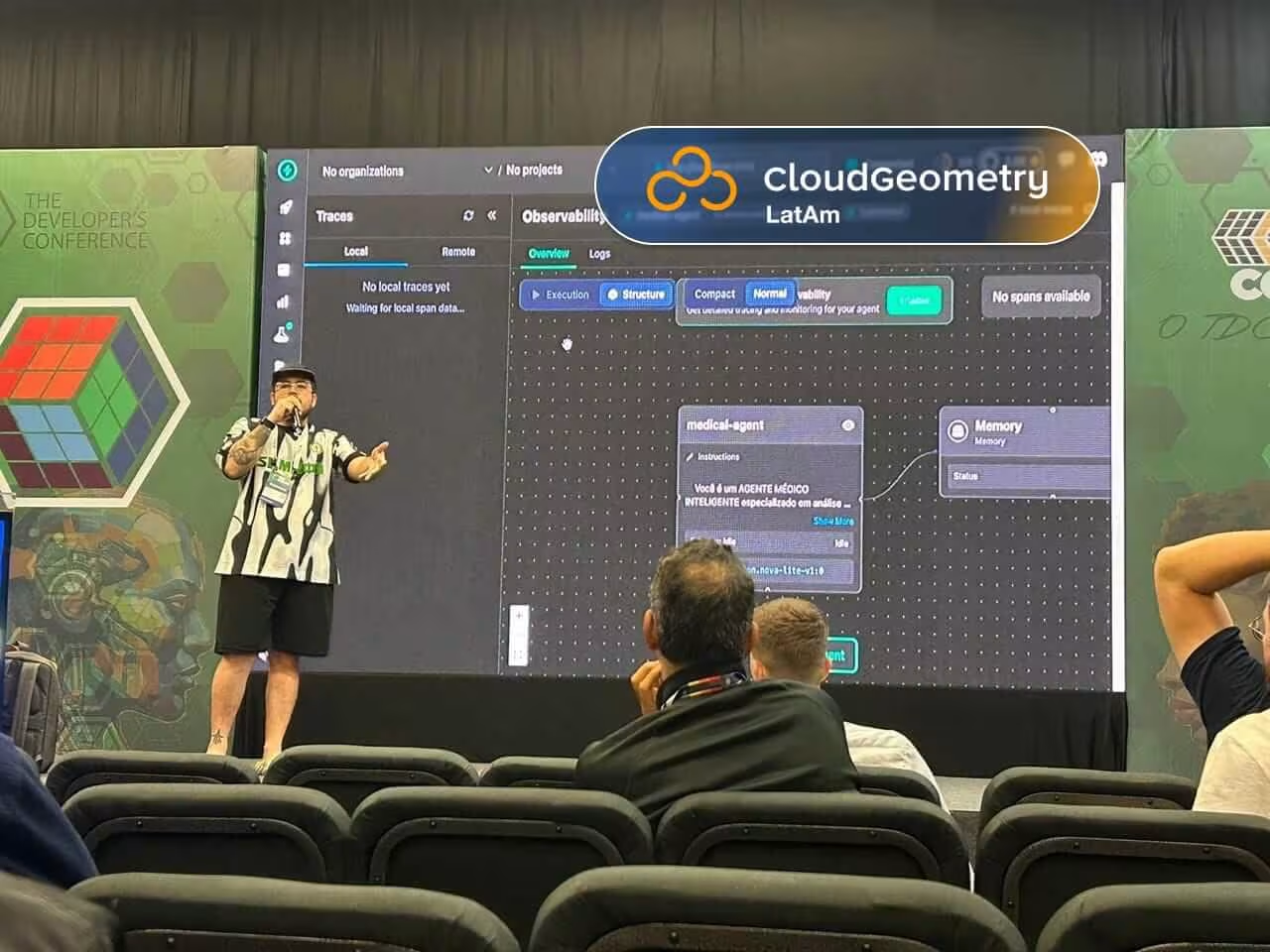
Insights from TDC São Paulo 2025 on Agent Event-Driven Architecture: autonomous agents, event-driven design, AWS demo, resilience, and 73% cost savings over microservices.

A practical guide for technical and non-technical leaders on building cost-aware AI systems, balancing performance with sustainable spend.

Modernization keeps you competitive. Learn how velocity with guardrails, cloud-native maturity, and cost-aware platforms drive speed, reliability, and ROI.

AI transformation requires more than tools — it needs strategy, leadership, and cultural change. This roadmap breaks down the journey to becoming an AI-first enterprise in six clear stages.

AI is changing how we write and maintain code. But without the right guardrails, AI-powered SDLC can become a “$6 haircut.” Learn where AI helps, where it fails, and how to adopt it responsibly.

Get a Custom Course for your management team, to get the latest update on the stage of AI in your industry.
 Continue conversation
AI assistant