
At a Glance
Executive Summary
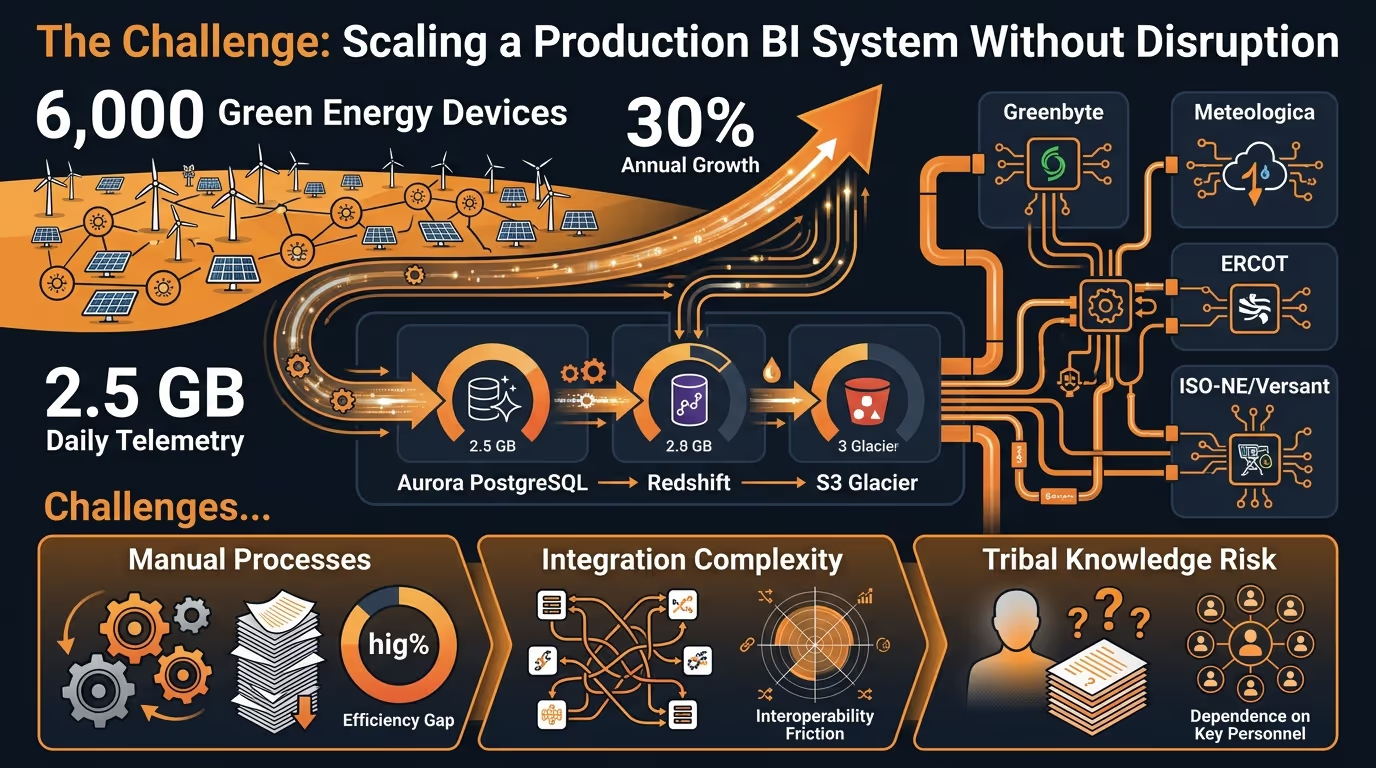
Longroad Energy (LRE), a leading renewable energy owner-operator, manages a complex Business Intelligence pipeline that processes telemetry from approximately 6,000 green energy devices — wind turbines, solar panels, and inverters — with 30% annual device growth. CloudGeometry has supported LRE’s BI platform for several years through traditional managed development. The AI-MSL engagement represents a transition to a supervised, AI-driven software delivery model applied to an active, production-grade system with real operational constraints.
This use case documents the first complete pass through the AI-MSL SDLC framework on a brownfield system — from evaluation through code implementation and QA — and the practical realities encountered along the way.
The Challenge: Scaling a Production BI System Without Disruption
LRE’s BI pipeline is a mission-critical system supporting operational reporting, compliance (SOC-1), and investment decision-making across a growing portfolio of renewable energy assets.
Key pressures on the system:
- Growing Data Volume: ~2.5 GB of raw telemetry signals daily, with hot/warm/cold tiered storage across Aurora PostgreSQL, Redshift, and S3 Glacier.
- Integration Complexity: Multiple external data source integrations (Greenbyte, Meteologica, ERCOT, ISO-NE/Versant, and others) requiring continuous maintenance and monitoring.
- Manual Processes: Deployment, testing, and verification workflows remained largely manual — limiting velocity and consuming engineering capacity on repetitive tasks.
- Tribal Knowledge Risk: Deep system understanding concentrated in a small team, making onboarding and knowledge transfer costly.
The Solution: AI-MSL Framework — Phase by Phase
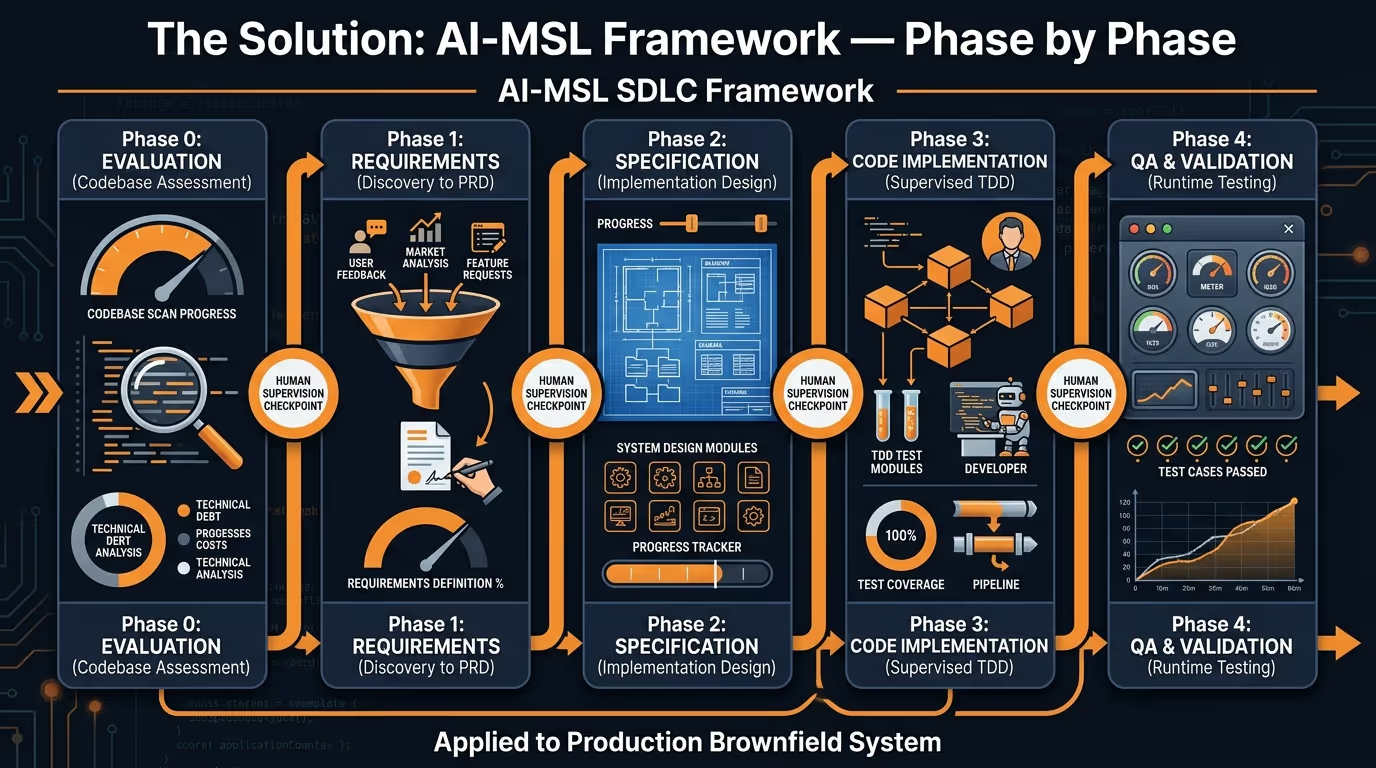
CloudGeometry applied the AI-MSL SDLC framework to LRE’s existing system, treating it as a real-world proving ground for supervised AI-driven development on a production brownfield codebase. The framework follows five structured phases, each with defined gates requiring human approval before proceeding.
Phase 0: Evaluation — Onboarding & Code Assessment
The engagement began with a fully autonomous codebase evaluation, analyzing the entire system and producing comprehensive documentation: architecture analysis, product context, AI context bundles, testing documentation, and onboarding materials.
- What was produced: A comprehensive system map covering LRE’s AWS infrastructure (Lambda, StepFunctions, Aurora, Redshift, S3, Glue, Athena), integration points, data flows, and an AI context bundle used by all subsequent phases.
- Key insight: The existing system’s complexity — spanning serverless orchestration, multiple storage tiers, and real-time integrations — validated the need for deep context engineering before any AI-assisted development could begin. This is a one-time cost per codebase; all future change requests reuse the evaluation artifacts.
Phase 1: Requirements — Structured Discovery to PRD
Structured requirements discovery transformed the initial problem statement into an approved Product Requirements Document through validated gates.
- What was produced: A single, approved PRD with functional and non-functional requirements that served as the canonical input for the specification phase.
- Key observation: Because LRE had already invested in detailed upfront requirements documentation, the AI-MSL requirements phase primarily validated and structured existing requirements rather than discovering new ones. This significantly reduced clarification cycles and improved consistency.
Phase 2: Specification — Implementation-Ready Design
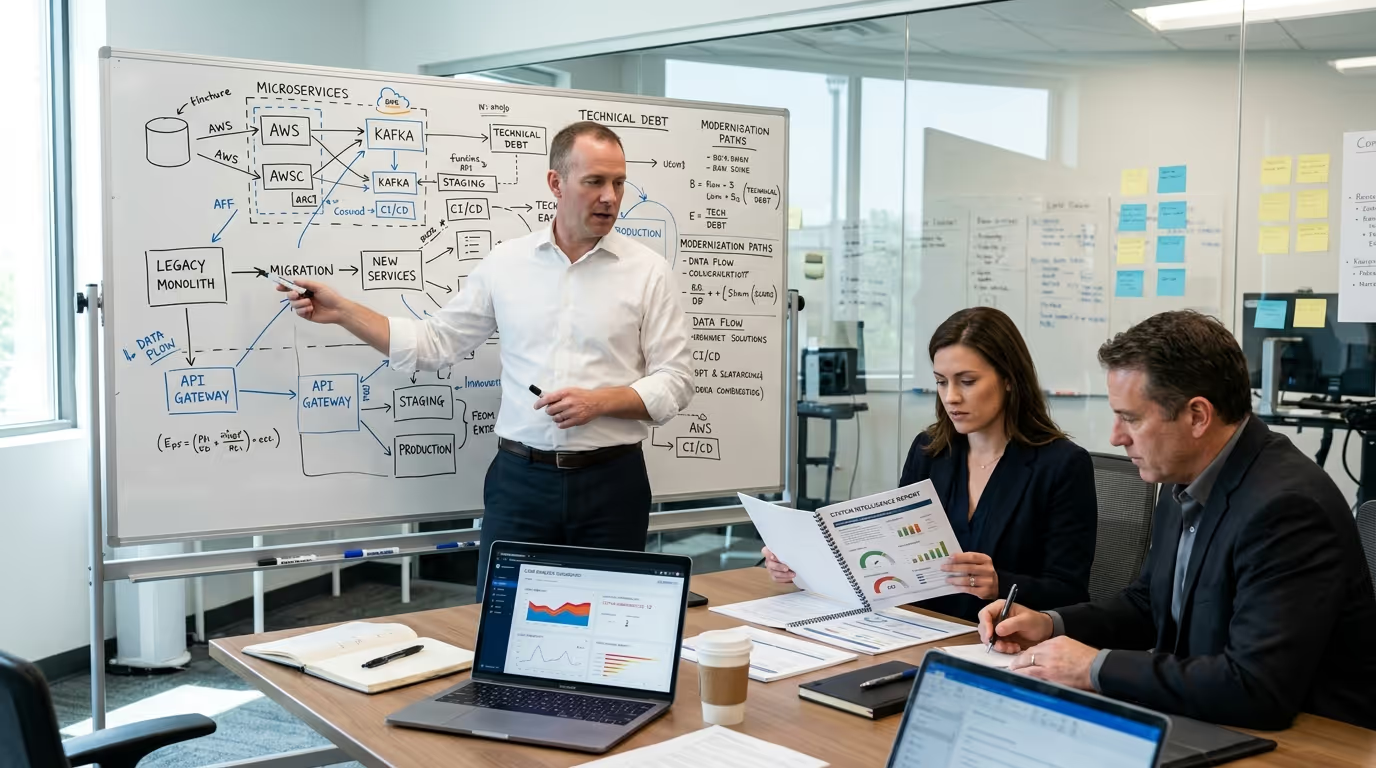
The PRD was transformed into a detailed implementation specification — not just a task list, but a complete technical design including architecture decisions, API contracts, data models, security and performance considerations, and per-task implementation instructions with exact file targets and acceptance criteria.
- Output: 6 feature groups containing 16 discrete tasks, each with dependency chains, file-level scope, and acceptance criteria — a level of specification detail that exceeds what most teams produce manually.
- Human gates: Four architecture review gates required human decisions on solution selection, architecture validation, file scope, and final approval — reinforcing that AI accelerates specification while humans govern design decisions.
- Value demonstrated: The ability to decompose a complex, real-world PRD into implementation-ready specifications with consistent granularity, clear dependencies, and traceable coverage of all requirements.
Phase 3: Code Implementation — Supervised TDD Automation
Implementation follows strict test-driven development methodology with per-task execution, automated quality gates, and artifact verification.
- Current status:16 tasks were scheduled for completion — the foundational infrastructure feature group is complete. Implementation is ongoing as new feature groups are introduced.
- Quality enforcement: Each task passes through automated gates for unit test coverage, lint compliance, cyclomatic complexity, and function length limits before acceptance.
- Architectural governance finding: During post-generation review, deviations from the approved specification were identified in the generated code. While the AI produced working code rapidly, it did not strictly adhere to all prior architectural decisions. This was caught during human review and is correctable — but it confirms that architectural consistency enforcement remains a human responsibility, even when AI accelerates implementation.
Phase 4: QA & Validation — Runtime Integration Testing
Initial QA validation is ongoing for the completed tasks, testing the generated code in the actual deployment environment.
- Current status: Backend deployment to the development environment completed successfully. Frontend integration testing revealed environment configuration issues requiring an additional refinement cycle.
- Key observation: Although unit tests and quality gates passed during the code phase, the first end-to-end execution required additional configuration alignment. This confirms that runtime integration validation remains an essential step beyond static quality checks — generated code may require one or more refinement cycles before achieving full operational readiness.
Practical Realities: What We Learned
Infrastructure Dependency as a Bottleneck
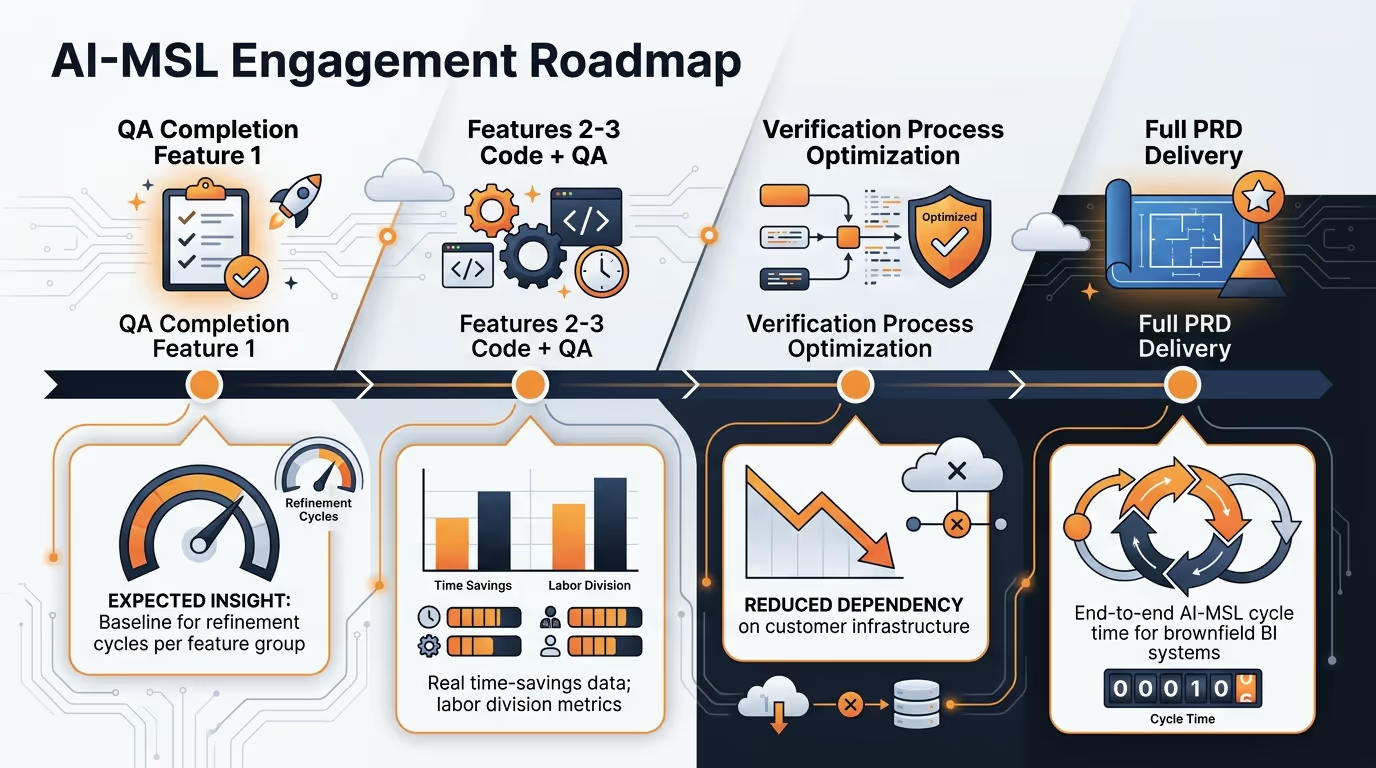
A key finding from this engagement is the impact of infrastructure and data dependencies on verification speed. LRE’s testing and stabilization process requires access to dev infrastructure and production-representative data that resides on the customer side. This dependency significantly slows the verification and stabilization step — which remains the most manual part of the AI-MSL flow.
AI Speed vs. Architectural Fidelity
Code generation is extremely fast — but speed alone is insufficient. The AI-MSL framework’s value lies not just in generating code quickly, but in the governance structure that catches deviations before they reach production. The specification phase’s detailed architectural decisions provide the baseline against which generated code is validated. Without this baseline, AI-generated code risks introducing subtle architectural drift.
Metrics Are Still Forming
The engagement is a successful implementation through the code phase with QA validation underway for the evolving feature groups. Definitive metrics on end-to-end time savings and the division of labor between AI-assisted and manual work will require data from multiple completed features. The team is deliberately managing for this data to ensure continued efficiency gains.

What This Means for AI-MSL
This is an honest representation of a first-run successful AI-MSL engagement on a production system:
- Context engineering works. The evaluation phase produced actionable system intelligence that directly informed every subsequent phase — and is reusable for future change requests.
- Specification depth matters. The AI-generated implementation specification exceeded typical manual output in granularity, providing per-task file targets, acceptance criteria, and dependency chains that made code generation tractable.
- Code generation is fast but requires governance. AI-generated code can deviate from approved designs. The framework’s gate structure and human review catch these deviations — reinforcing that supervised automation, not autonomous generation, is the correct model.
- Runtime validation is non-negotiable. Static quality gates (tests, lint, complexity) are necessary but not sufficient. End-to-end integration testing in the actual deployment environment remains essential and may require iterative refinement.
- Verification is the constraint. In brownfield systems with customer-controlled infrastructure, the manual verification loop — not the AI-assisted coding — is the rate-limiting step. This is a solvable problem that becomes clearer with each feature cycle.
What Comes Next
Key Value Propositions Demonstrated
1. Context Engineering on a Live System
AI-MSL evaluation mapped a complex, multi-year AWS BI pipeline into a structured context layer — converting tribal knowledge into explicit, reusable system intelligence that serves as the foundation for all subsequent AI-assisted phases.
2. Implementation-Ready Specification, Not Just a Plan
A real customer PRD was transformed into a detailed implementation specification — architecture decisions, API contracts, data models, and 16 task-level instructions with file targets and acceptance criteria — demonstrating that AI-assisted specification works on production-grade requirements, not just greenfield specs.
3. Supervised Automation with Architectural Governance
Rather than showcasing ideal-state metrics, this engagement demonstrates AI-MSL operating under real production constraints — with human gates at every phase transition, architectural deviation detection during code review, and iterative QA refinement. The framework’s value is in the governance structure, not just the speed.
Company Overview
Founded in 2014 in Silicon Valley, CloudGeometry has evolved into a strategic technology transformation partner for technology-driven businesses, helping them upgrade their operations and software for the AI era.
- Global Team: Over 100+ full-time employees (FTEs) worldwide, including Solution Architects, AI Engineers, and DevOps experts.
- LRE Partnership: Multi-year engagement spanning managed development, operational support, and now AI-MSL adoption — demonstrating the transition path from traditional outsourced development to supervised AI-driven delivery.
Ready to Assess Your System?
See how AI-MSL can map your existing codebase, accelerate planning, and bring supervised automation to your development process.
Contact us today to schedule a live demo