At a Glance
Executive Summary
Digital Remedy is a performance advertising technology company whose platform powers campaign intelligence, order management, and media planning for advertisers and agencies. Their technology stack comprises four interconnected products — Dashboard, OMS, Platform (Echo), and MediaPlanner — each serving distinct user communities within the advertising operations lifecycle.
In December 2025, CloudGeometry ran a Proof of Concept for AI-SDLC across three Digital Remedy products simultaneously: Dashboard, MediaPlanner, and OMS. The PoC confirmed that the AI-MSL approach scales across multiple codebases concurrently — a critical validation for organizations managing portfolios of interconnected applications.
The Challenge: Four Products, One Team, Growing Demand
Digital Remedy operates a suite of production advertising technology products that are tightly coupled through shared data, user identity, and business workflows:
- Dashboard — The flagship product. Customizable, cross-channel analytics giving advertisers visibility into campaign performance — clicks, views, device types, peak times — with client-ready report generation.
- Order Management System (OMS) — Internal platform used by Advertising Operations and Analytics teams to set up, track, and fulfill ad campaigns across connected external systems.
- Platform (Echo) — Central hub and single entry point. Manages user access, roles, and permissions across every product. Powers shared features like in-app announcements and alert configuration.
- MediaPlanner — Sales enablement tool that generates tailored media proposals. Given budget, campaign goals, and target audience, it recommends the right product mix and builds a ready-to-present proposal.
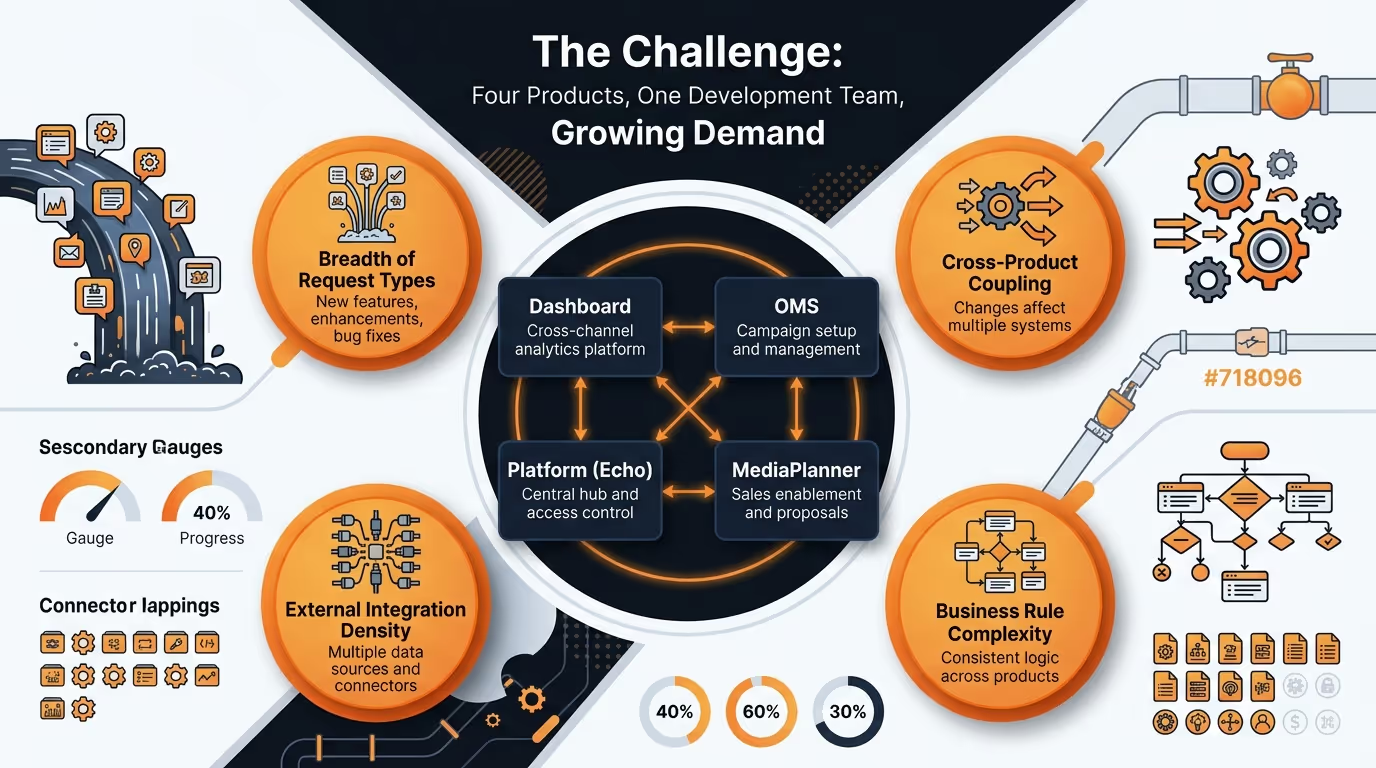
Key pressures on the development organization:
- Breadth of Request Types: New features, enhancements, and bug fixes across all four products simultaneously.
- Cross-Product Coupling: Changes in one product frequently affect others — OMS onboarding a new ad product impacts Dashboard reporting, MediaPlanner proposals, and Platform permissions.
- External Integration Density: Multiple external data sources and advertising connectors create ongoing maintenance overhead competing with new feature development.
- Business Rule Complexity: Budget calculations, spend tracking, alert messaging, and planning workflows encode complex domain logic that must remain consistent across products.
The Solution: AI-MSL PoC — Three Products in Parallel
CloudGeometry applied the AI-MSL framework to Digital Remedy's environment in December 2025, running a simultaneous PoC across Dashboard, MediaPlanner, and OMS.
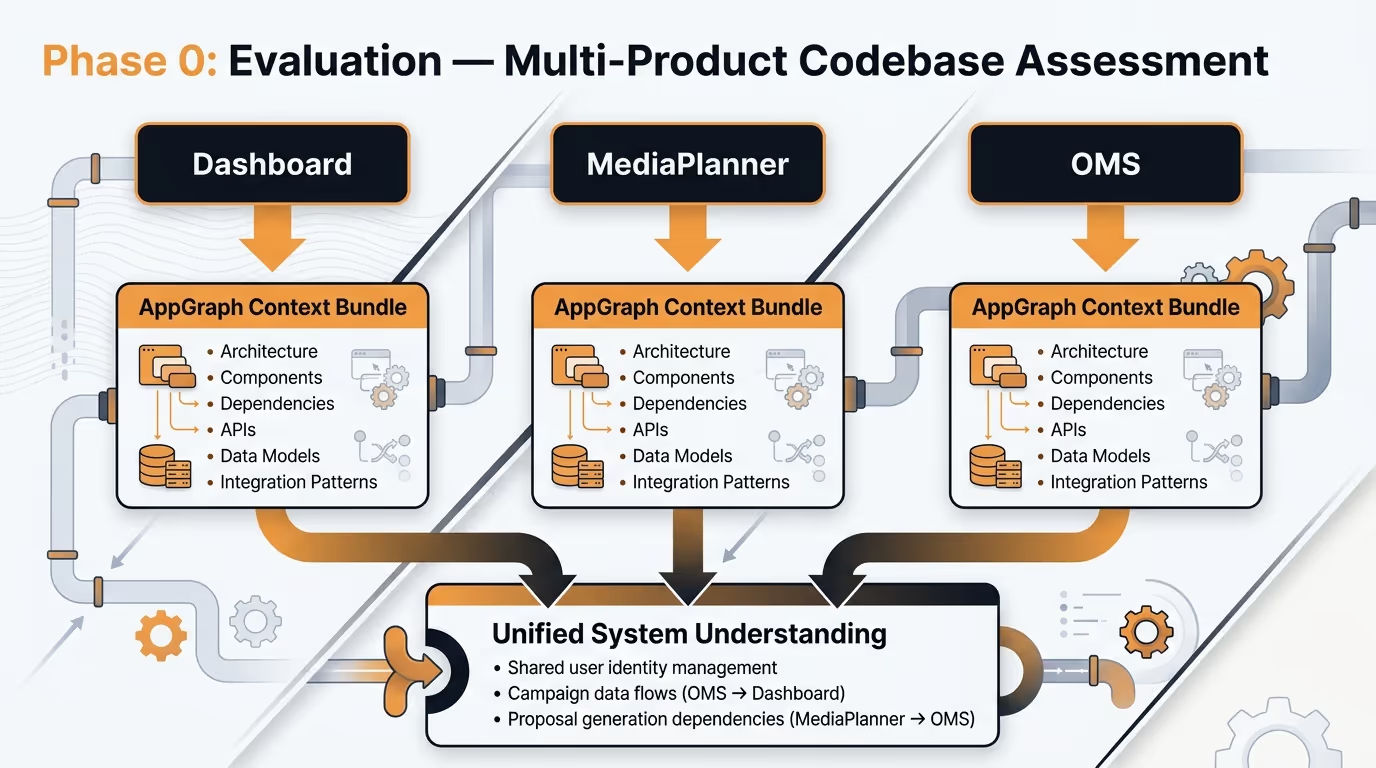
Phase 0: Evaluation — Multi-Product Codebase Assessment
Each product was independently evaluated using AI-MSL's automated codebase analysis, producing a structured context layer per system.
- What was produced: Three independent context bundles — one per product — capturing architecture, component relationships, dependencies, API contracts, data models, and integration patterns.
- Key insight: Multi-product evaluation revealed cross-system dependencies not explicitly documented — particularly shared user identity (Platform/Echo), campaign data flows (OMS → Dashboard), and proposal generation dependencies (MediaPlanner → OMS).
Phase 1: Requirements — Business Intent to Specifications
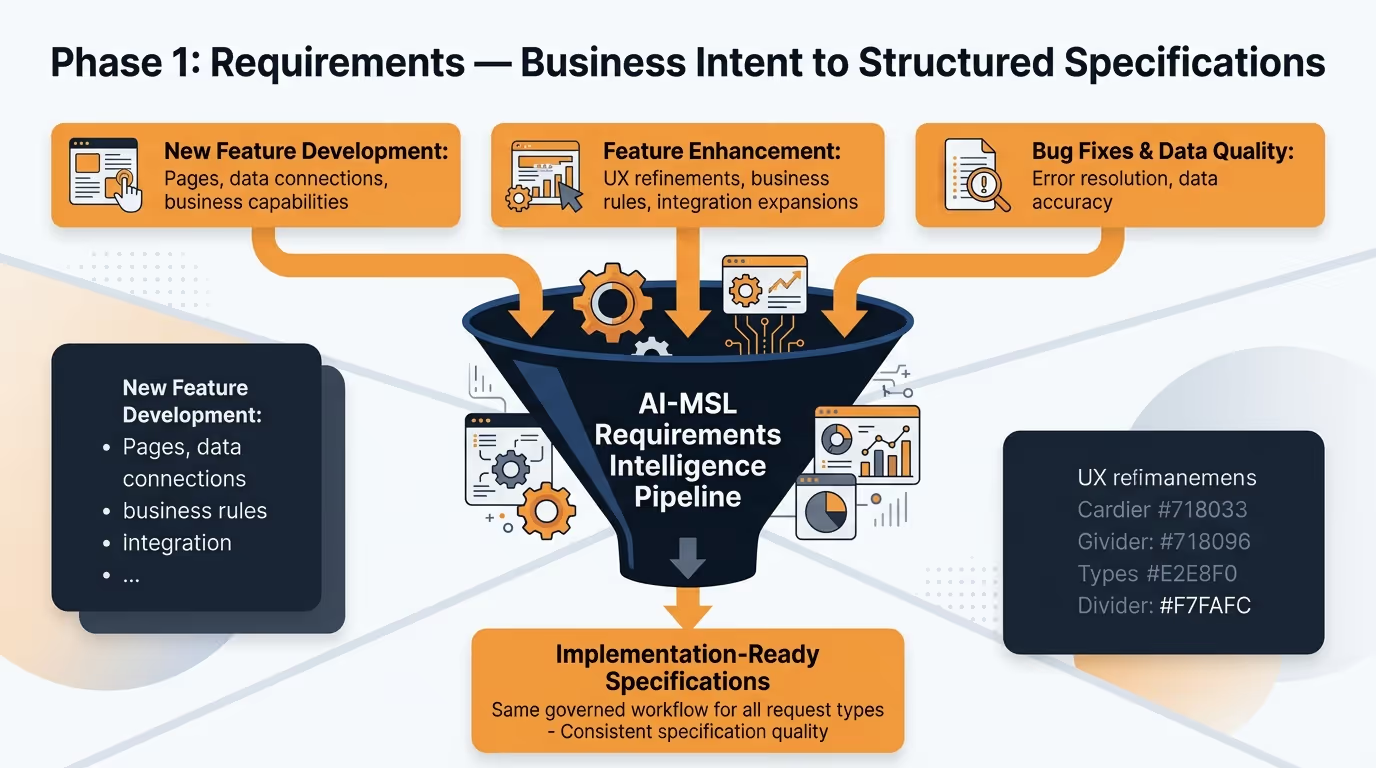
Development requests were processed through AI-MSL's requirements intelligence pipeline, transforming business-level intent into implementation-ready specifications.
- Request types validated: New Feature Development — building new pages, data connections, or business capabilities (e.g., onboarding new ad products into OMS, new reporting modules in Dashboard)
- Feature Enhancement — extending existing functionality (e.g., UX refinements, business rule updates, integration expansions)
- Bug Fixes & Data Quality — resolving errors, inconsistencies, and data accuracy issues
- Value demonstrated: The same governed pipeline processed new features, enhancements, and bug fixes with consistent specification quality — no separate workflows needed.
Phase 2: Implementation — Supervised Automation Across Products
- Sprint-level tasks were executed through AI-MSL's governed implementation pipeline with TDD methodology, quality gates, and human review.
- Concurrency validated: Tasks across Dashboard, MediaPlanner, and OMS were processed simultaneously — not sequentially.
- Quality enforcement: Each implementation passed automated gates for test coverage, code quality, and specification adherence before human review.
- Key result: Standard sprint-level tasks that typically required multi-week delivery cycles were completed in days.
Practical Realities: What We Learned
Multi-Product Concurrency Works
The most significant validation: AI-MSL operates effectively across multiple interconnected products simultaneously. Most AI coding tools operate on a single repository. The ability to maintain context across three codebases with shared dependencies is a direct result of product-level context engineering during evaluation.
Cross-Product Dependencies Surface During Context Engineering
Evaluation revealed integration patterns and data dependencies between Dashboard, OMS, and MediaPlanner that were not fully documented. This "discovered context" — relationships in code but not in documentation — means future changes can be assessed for blast radius before implementation begins.
The Full Request Spectrum Is Addressable
Digital Remedy's requests span building entirely new data pipelines to adjusting date picker behavior. The PoC confirmed that AI-MSL's governed pipeline handles this full range without requiring different processes for different request types.
Sprint-Level Scope Is the Right Starting Point
The PoC focused on sprint-level tasks (days to weeks of traditional effort) rather than multi-month epics. This produced credible velocity comparisons — tasks completed in days vs. traditional sprint cycles — without overstating capabilities on larger initiatives.
What Comes Next
Key Value Propositions Demonstrated
1. Multi-System AI-MSL at Scale
Validated that AI-MSL can operate across three interconnected products simultaneously — directly relevant for any organization managing a portfolio of applications.
2. Full Development Request Spectrum
New features, enhancements, and bug fixes processed through a single governed pipeline — matching the full breadth of Digital Remedy's actual business demand pattern.
3. Cross-Product Context Engineering
Evaluation of multiple codebases simultaneously revealed undocumented cross-system dependencies — providing system intelligence that did not exist in any documentation prior to the engagement.
4. Credible Velocity on Representative Work
Sprint-level tasks completed in days vs. traditional multi-week sprint cycles — verified speed improvements without overstating capabilities.
Company Overview
Founded in 2014 in Silicon Valley, CloudGeometry has evolved into a strategic technology transformation partner for technology-driven businesses, helping them upgrade their operations and software for the AI era.
- Global Team: Over 100+ full-time employees (FTEs) worldwide, including Solution Architects, AI Engineers, and DevOps experts.
- Digital Remedy Partnership: CloudGeometry has supported Digital Remedy's product development across Dashboard, OMS, Platform, and MediaPlanner — providing the deep system familiarity that enabled the multi-product AI-MSL PoC.
Ready to Assess Your System?
See how AI-MSL can map your existing codebase, accelerate planning, and bring supervised automation to your development process. Contact us today to schedule a live demo.